




My thesis in 3 questions
The floor is given to PhD students and young doctors. They present their work by answering 3 questions.
Interview with Yasmine Guittard
Currently pursuing a PhD in Art and Digital Humanities at LARSH, Yasmine Guittard is working on a thesis on digital creation and autism: "Les humanités numériques dans l'acceptation et l'empouvoirement relatifs au trouble du spectre de l'autisme"
.
Through her TikToks, she hopes to combine digital creation with a serious subject, helping to change the way autism is viewed in France.
Interview with Auguste Hazemann
Auguste Hazemann is a designer and artist in his 1st year of doctoral studies in the LARSH laboratory.
.
Her thesis "Usages du numérique, interactivité et autonomisation des objets au prisme d'une recherche par le projet",
focuses on putting objects into action within their ecosystem, thanks to the use of materials and craft techniques or current technologies that enable objects to be integrated with sensitive interactions: touching, caressing, blowing
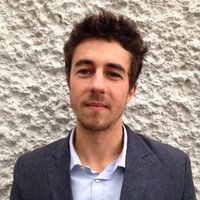
Weights of risk-perceived decision-making in the context of innovation, by Benjamin Astier, young doctor in information and communication sciences at UPHF (2021), temporary teaching and research associate at LARSH (DeVisu department) and IUT.
What is the originality of your doctoral research?
Most innovation projects fail. Also, in the Hauts-de-France Region - the location of my work - innovation issues are numerous. Taking the textile industry as the terrain for my research, questions then arise such as: How can we relocalize textiles while remaining competitive? How can we link 4.0 technology with traditional know-how? Is it possible to organize collective action between competing companies facing similar problems?
From this angle, a first original aspect of my thesis aims to grasp the influence of a territorial innovation ecosystem through the way in which corporate executives or entrepreneurs perceive the risks inherent in innovation processes, from an info-communication point of view. How do they construct their "strategic landscape" on the basis of their perceptions? Which perceived risks - rightly or wrongly - appear to dominate decision-making processes?
A second originality lies in the modeling of perceived-risk dynamics. Following an exploratory and inductive study, the formalization of this dynamic is constituted in two parts. The first part highlights prominent elements of the HdF ecosystem, namely Device, Networks, Aspiration, Infrastructure and Territory. The second part identifies the risk-perception attributes associated with the five key elements of the ecosystem, weighted by the social actors themselves. The four bivalent and related attributes are Trust, Intelligence, Feasibility and Difference. The cross-referencing of salient ecosystem elements by attribute weighting thus sheds light on the nature of decisional risk-perception.
What does this work change?
The doctoral work identifies more precisely the managerial informational practices that tend to accentuate or mitigate innovation-related risks. Thus, the thesis offers public decision-makers, wishing to act on the ecosystem, a typology of the decision-making needs of social actors involved in innovation according to their position, activity, situation and environment.
With this in mind, the thesis develops a decision aid focusing on the dynamics of risk perceptions within an innovation ecosystem. To this end, the work operationalizes an informational (how certain data illuminate decision-making issues) and communicational (what social actors share as norms, expectations, ...) analysis within a territorial ecosystem.
The aim of this thesis is to explore the dynamics of risk perceptions within an innovation ecosystem.
What was the major challenge to overcome?
A major challenge was to identify the fashion and textile sector, which is undergoing organizational and technological change. Some companies, from the small to the behemoths, are sometimes staking their survival on an extremely competitive market. This has the effect of exacerbating managers' discretion about their strategy and practices. We are, therefore, in a field where data confidentiality is paramount.
.These constraints of operational reality had an impact on the way field data was collected and analyzed. This necessitated the development of a mixed research methodology, based on the work of Pierre Vermersch (2019) and Alex Mucchielli (2016) in particular, concerning qualitative interviewing and analysis methods, and then on the work of George Kelly (1955), in psychology, on the Repertoty Grid approach.
These constraints of operational reality have had an impact on the way in which field data have been collected and analyzed.
As a final word, the thesis was made possible by co-financing from the Hauts-de-France Region and the HémisF4ire Design School research team (Institut Catholique de Lille), as well as by doctoral supervision in Information and Communication Sciences from the DeVisu department.
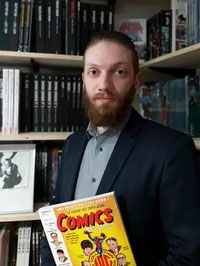
Mainstream comics from the United States to France. A contribution to global history, by Pierre-Alexis Delhaye, doctoral student.
What is the subject of your research?
My research focuses mainly on mainstream comics, i.e. the graphic narratives produced in the United States by publishers such as Marvel or DC Comics and which most often tell superhero stories. I'm looking at two aspects in particular. The first is the socio-political aspect of these publications, to better understand how they can help readers think about contemporary times. The second is mainly editorial, since it involves analyzing the ways in which comics are published in cultural transfer, i.e. how they are imported to the French-speaking world, translated, adapted, censored and published in anthological reviews between the years 1960 and 1990.
.Why analyze comics?
Comics have fascinated me for some twenty years now, but beyond this personal interest, there's the conviction that these popular publications are an ideal access for the history of mentalities, with fiction here becoming a means of reinterpreting politics, primarily for the American reader. Through their international distribution, comics are also part of a global cultural history, a field that has been explored more for legitimized intellectual or artistic relations, but more rarely for the most popular media. The publishers analyzed in my thesis (Mainstream comics from the USA to France. A contribution to global history) have almost never been the subjects of in-depth research, whereas studies on the major publishers of Franco-Belgian comics have multiplied in the last decade.
What does this approach bring that's new?
Tackling my subject through both historical and literary analysis allows us to observe a complete cultural transfer, both in terms of the content of the publications and their reception, thanks to readers' letters for example, and in terms of the conditions of this transfer, such as the legislation that engenders censorship of comics in France. It's also an opportunity to get to know the so-called "smugglers", the forgotten publishers and translators who organized the transfer under unfavorable conditions, sometimes former Resistance fighters who turned to the children's press after the war. It's also a way of going back to the sources of a superhero imaginary that is now well established in France, as evidenced by their success in the cinema.
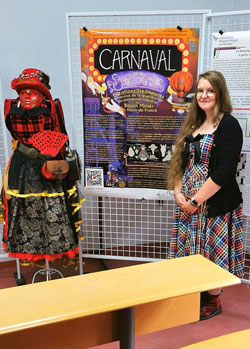
Steampunk in Hauts-de-France: Telling the story of our industrial past
What is the subject of your research?
I'm currently a PhD student in research-creation under the supervision of Mr. Arnaud HUFTIER in the DeScripto department at LARSH. My work is entitled Steampunk in Hauts-de-France: Telling our industrial heritage. Originally a sub-genre of science fiction literature that appeared in the 1980s, Steampunk has developed strongly and today possesses an aesthetic, iconography and philosophy rich in meaning as well as possibilities. Its fundamental principle is to shed light on and revisit the XIXth century in an uchronic and fantastical way. My aim is to question these potentialities in order to create an artistic and cultural project that would put the spotlight back on the industrial heritage of the Hauts-de-France region (in particular, that of the Bassin Minier, a UNESCO World Heritage Site), while bringing it into the Third Industrial Revolution that is taking shape today.
Why did you choose to work on this subject?
It's also one of the first academic works conducted on Steampunk in France. I'm therefore keen to carry out in-depth theoretical research on the subject, but also to pass on the knowledge and know-how developed through my work and encounters. Indeed, studying Steampunk allows me to conduct research-creation and carry out transdisciplinary work that fits perfectly with the polytechnic ambitions of U.P.H.F.
This was already at the heart of my Master's research, as I was working on the figure of the robot in Art. This led me to specialize in the relationship between the Arts and Humanities with Science and New Technologies. In particular, I studied the importance of aesthetics in robotics and the crucial role of the appearance given to humanoid machines for future users.
.I chose to focus my work on the industrial heritage of the Hauts-de-France region, and particularly the Bassin Minier, because I'm originally from this area. My parents, grandparents and even great-grandparents worked in the region's factories. This thesis is a tribute to those close to me who helped me get to where I am today, even if they are no longer here to see it. The notions of heritage and transmission are very important in my work. In fact, the subtitle of this one is: "We are all tomorrow's ancestors."
Do you have an activity alongside your research?
I'm currently a study engineer for the Tourism and Heritage Valorization (TVP) chair at UPHF, in collaboration with the Communauté d'Agglomération de la Porte du Hainaut (CAPH). At the same time, I've been developing my own artistic activity for several years under the pseudonym Studinano. I practice painting, drawing and digital arts (pixel art, photography, video...) and have long been passionate about cinema and video art in general. In fact, I used to be a Visual Arts teacher in secondary school, because I wanted to be able to pass on my passion for creation. I'm an avid reader, with a particular passion for fantasy and science fiction novels. I've also always been interested in fields as diverse as interior design and garden art, Egyptology and astronomy. Naturally curious, I'm also interested in sociology or psychology.
Read also

Theses in progress
17.03.2022

Defended theses
17.03.2022

Management specialties
17.03.2022